Conversely, anti-DEI proposals generally received minimal support (on average 1.5%) while the pro-DEI proposals averaged over 10%¹, demonstrating that shareholder support for board diversity and related disclosures remain relevant and that companies should continue to focus on how to best present the information on their directors, individually and in the aggregate, so that shareholders understand how the slate of directors presented at the annual meeting can support the company’s operations and strategic initiatives.
Changes to Company Disclosures
In reviewing board related disclosures included in proxy statements for the 2026 season, companies have generally responded to the changing landscape by modifying their disclosures from a primary focus on gender and racial/ethnic diversity to return to a focus on the depth of skills, backgrounds, and representative viewpoints brought to the board by the directors as a whole, through an increased variety of demographic, life, or work experience.
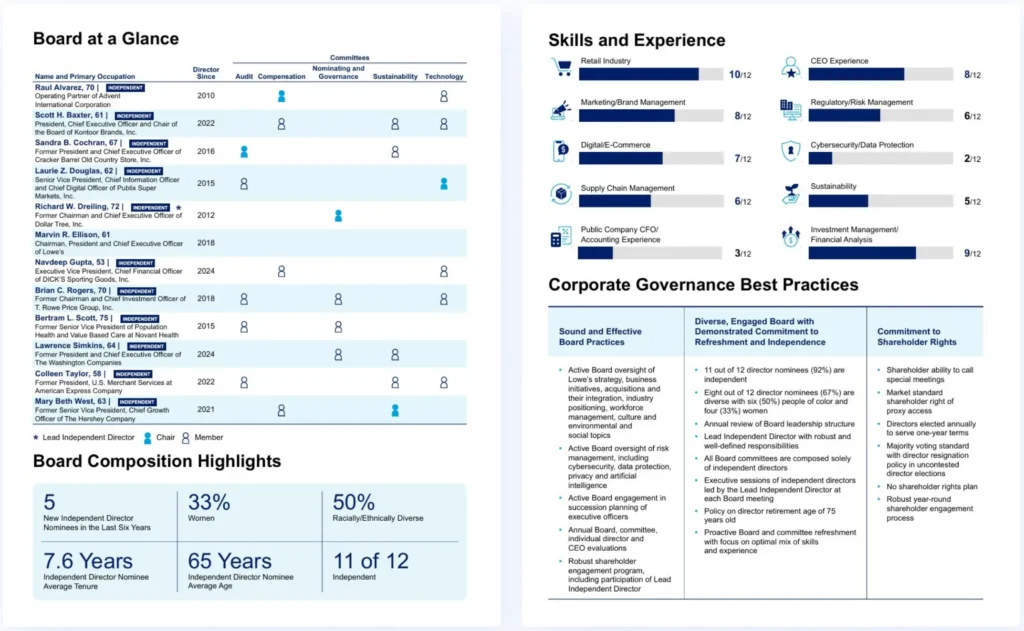
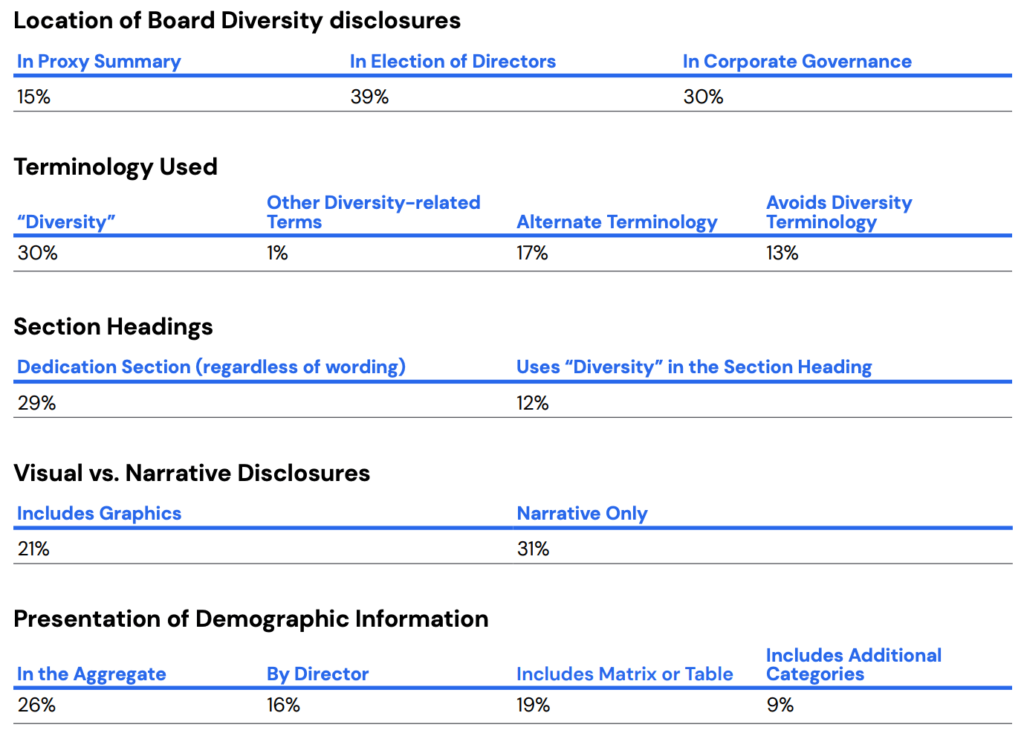
More specifically, a review of the S&P100 demonstrates that most companies continue to discuss the diversity of directors, though the presentation of that information may have changed:
- Proxy summaries typically focus on independence, age, and tenure – though many still include gender and racial/ethnic diversity statistics. Where the latter is included, it may not be at an equal presentation to the other characteristics and instead included within a less prominent infographic or included narratively in a table among a host of other discussion points.
- Even if not mentioned in the proxy summary, a significantly higher percentage of companies continue to provide aggregate statistics on gender and racial/ethnic diversity, either narratively or visually, in the discussion of board composition (typically located within the Election of Directors or Corporate Governance section).
- There are still a meaningful number of companies that include individual characteristics by director, including gender and race/ethnicity, within the skills matrix presentation.
¹How DEI Shareholder Proposals Are Fairing in 2026, Harvard Law School Forum on Corporate Governance, June 5, 2026, https://corpgov. law.harvard.edu/2026/06/05/how-dei-shareholder-proposals-are-faring-in-2026/#more-181643
- Simultaneously, companies are again speaking of diversity of experience more broadly, particularly in discussions of board diversity policies, and also expanding the identified diversity categories to include such things as birthplace or country of residence of directors, international experience, veteran status, sexual orientation, and other company-specific key differentiators.
- Also, some companies are beginning to move away from the traditional skills matrix table with an expanded discussion of key skills for directors and how they support company strategy and business operations and then include the list of applicable skills in the director biographies only. Some companies are also now including a list of key skills in the overview of director nominees (either in the proxy summary or at the outset of the Election of Directors discussion).
Takeaways for 2027
We would anticipate the 2027 proxy season to see a continuation of the trends in 2026, with companies focused on navigating the divide between the current anti-DEI political environment and the broader desire of shareholders to understand how the composition of the board of directors supports the needs of the company now and into the future. The emphasis should remain on disclosure that allows readers to ascertain the appropriate representation of those personal and professional experiences necessary to understand and oversee key risks for the company. Those needs and approaches to disclosure will remain heavily influenced by industry and governmental relationships as well as shareholder base, while all companies should continue to lean into tailored, skills- and strategy-linked narratives with clear, consistent disclosure that allows investors to assess diversity in the context of board effectiveness and long-term value creation for the company.
Benchmarking
Disclosure Examples
The following examples are intended to provide guidance on the various approaches companies are using in the current environment to present the diversity of the company’s board of directors and how it supports their ability to oversee the company, its operations, and strategic priorities.
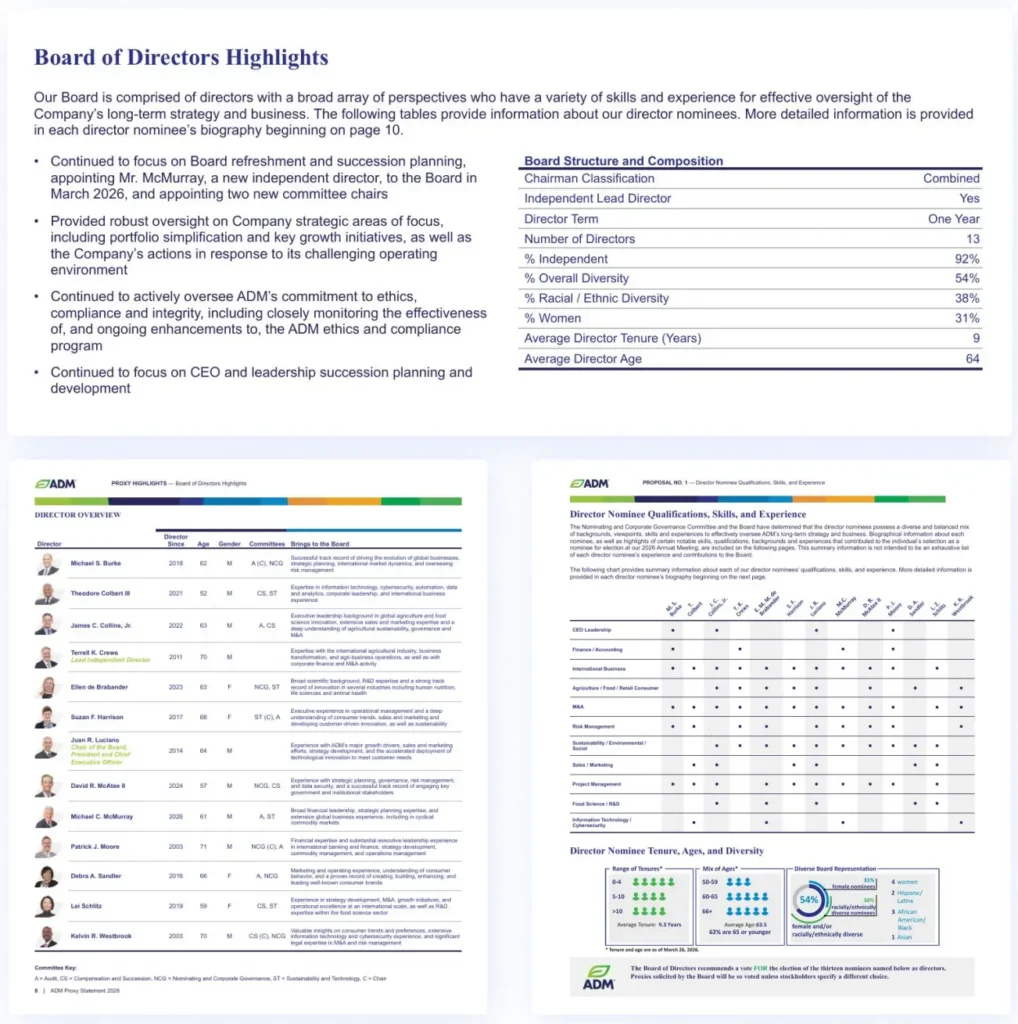
ADM – Includes board characteristics in a table in the proxy summary with infographics later in the document with the skills matrix; also includes key skills for each director in the nominee overview in the proxy summary.
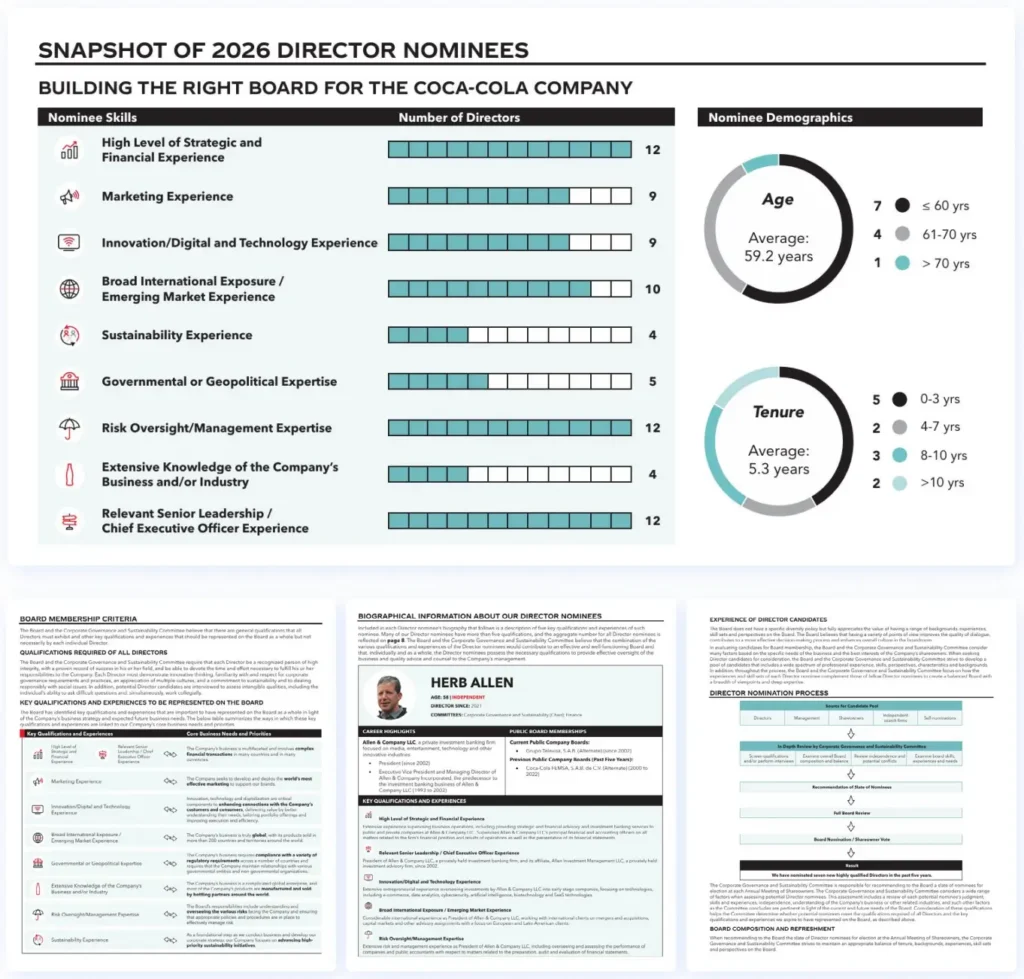
Coca-Cola – Disclosures are focused on “building the right board” for the company through diversity of backgrounds, experiences, skillsets, and perspectives represented on the board; in lieu of a traditional skills matrix, highlights how key qualifications and experiences support core business needs and priorities and uses the board biographies to indicate individual director skills.
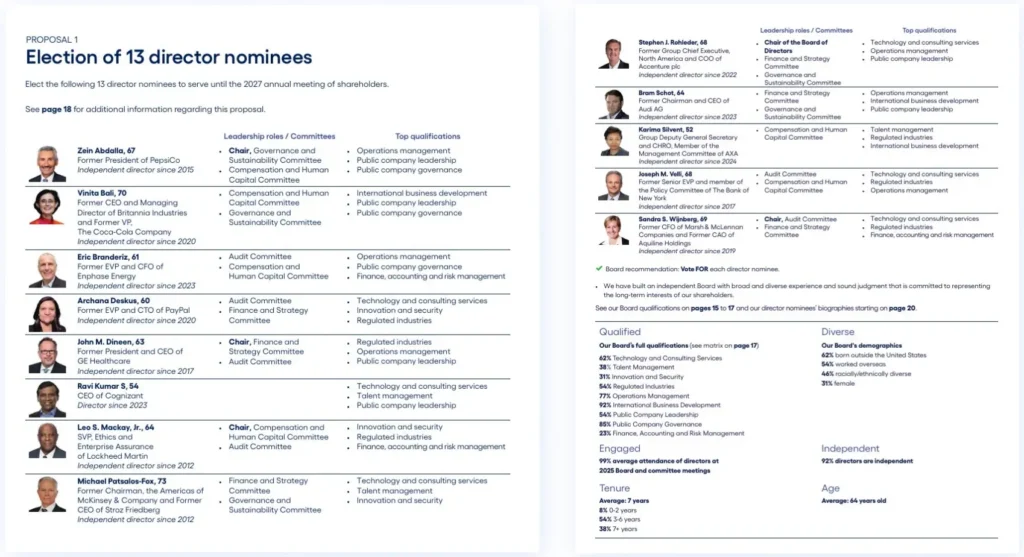
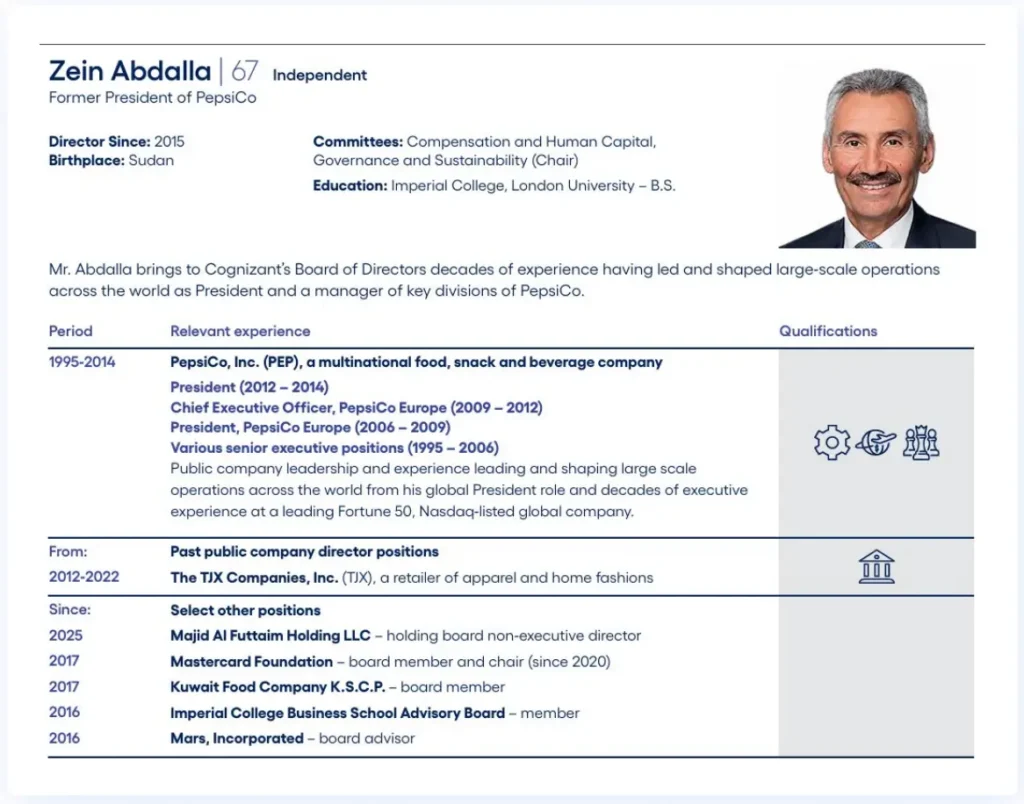
Cognizant – Includes top qualifications for each director in overview of nominees and includes percentage of directors born outside the US and worked overseas in addition to gender and racial/ethnic diversity characteristics in the proxy summary; also highlights birthplace in board biographies.
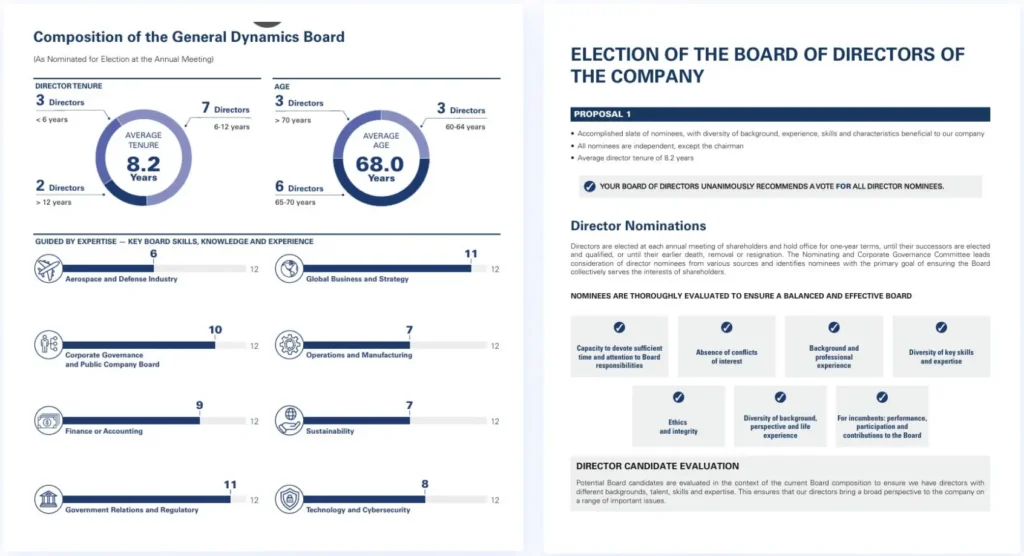
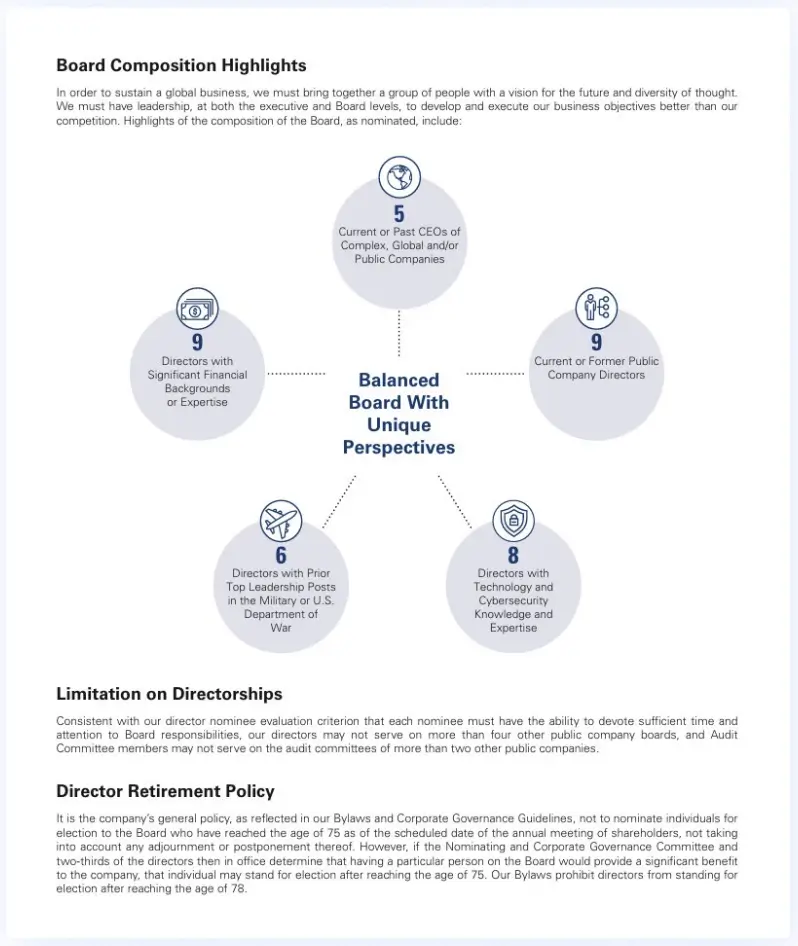
General Dynamics – Includes aggregate presentation of age, tenure, and skills in the proxy summary; focus under Election of Directors is on diversity of key skills and expertise as well as diversity of background, perspective, and life experience resulting in a “balanced board with unique perspectives.”
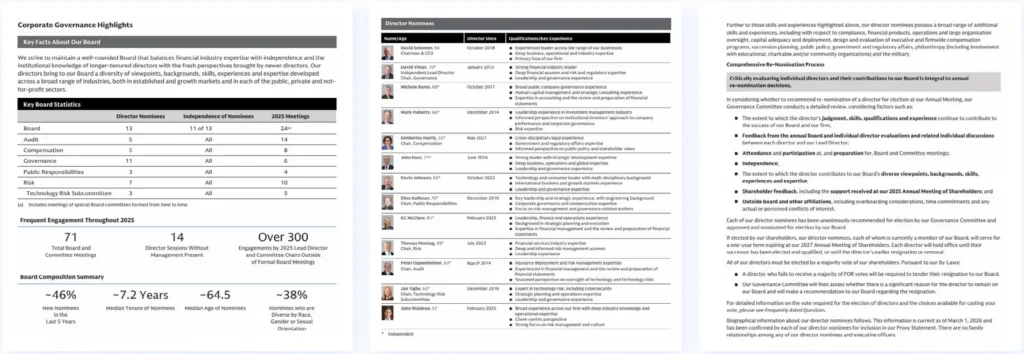
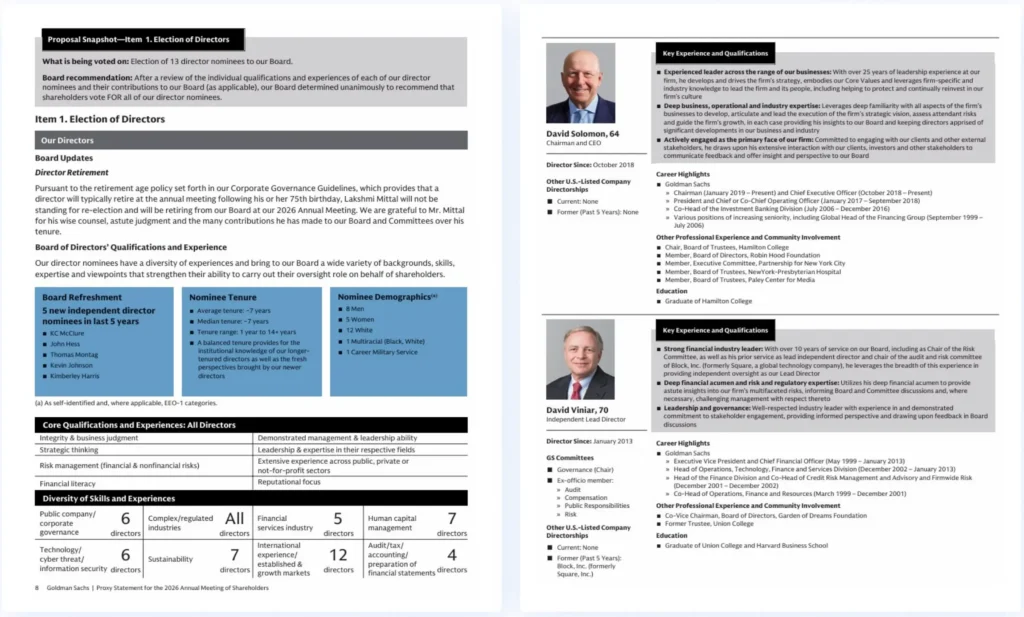
Goldman Sachs – Includes aggregate percentage of board that represents diverse characteristics under board composition summary in the proxy summary as well as includes key qualifications of nominees in overview table; provides more detailed nominee demographics (including military service) under Election of Directors; in lieu of skills matrix, includes narrative of core qualifications and additional skills and experiences using nominee table and board biographies to provide detailed information on key experiences and qualifications of each director.
Lowes – Includes aggregate statistics on gender and racial/ethnic diversity as well as highlights a diverse, engaged board in the proxy summary then includes a dedicated discussion of board diversity and individual demographic breakout in the skills matrix under Election of Directors.